Reliable temperature control is the single most decisive factor in keeping Carangidae products genuinely fresh from the moment they leave the water until they reach the consumer’s kitchen. When the Carangidae cold chain is managed correctly—through rapid chilling, stable low-temperature storage, and uninterrupted monitoring—it significantly reduces spoilage, preserves natural flavor, and prevents histamine formation that can threaten both safety and export standards. In practice, the commercial success of many suppliers and exporters depends on one critical point: how quickly and accurately they can bring down the internal temperature of the fish and maintain it throughout every stage of handling.
Because Carangidae species have higher muscle activity and a naturally faster spoilage rate, even a small temperature fluctuation can impact texture, freshness, and overall market value. Understanding the scientific behavior of this family and implementing a well-designed Carangidae cold chain becomes both a competitive advantage and a necessity. If you want to learn how to manage this process in a structured, safe, and economically efficient way, continue reading.
Why Carangidae Need a Stricter Cold Chain Than Most White Fish
Carangidae species spoil faster than many common white fish because of their active metabolism, higher dark-muscle content, and the way they accumulate heat immediately after capture. This is especially noticeable during the Carangidae fishing season Iran, when warm regional waters increase the initial body temperature of the catch. As a result, these fish begin biochemical changes—enzymatic softening, bacterial growth, and potential histamine formation—more rapidly than leaner white fish species.
Another critical reason involves the structure of Carangidae muscle fibers. Their higher myoglobin content accelerates oxidation, meaning even small delays in chilling can alter both flavor and color. Because these species are often harvested in large quantities within a short time window, processors must rely on tight operational discipline to avoid thermal load buildup. Companies with advanced systems, such as Pishva Holding, typically manage this risk through onboard slurry-ice systems, continuous temperature verification, and insulated logistics chains.
Compared to cod or haddock, Carangidae simply leave less room for error. A half-hour delay on deck or a mild break in refrigeration during transit can significantly shorten shelf life. Therefore, a stricter, more responsive cold-chain model is not optional—it’s essential for maintaining premium export quality throughout the Carangidae fishing season Iran and beyond.
Quality & Safety Targets: What “Fresh” Means for Carangidae
Achieving true freshness in Carangidae depends on aligning handling practices with recognized Carangidae quality standards used across global seafood markets. During the Carangidae fishing season Iran, temperature control becomes the defining parameter: the internal temperature must reach 0–4°C as quickly as possible and remain stable until processing. This helps preserve the natural firmness of the flesh and slows lipid oxidation, which is more pronounced in Carangidae than in many white-meat species.
Freshness also means low histamine levels, clean odor, intact skin, and a translucent appearance in the muscle. High-quality Carangidae exhibit elastic texture when pressed, minimal gaping, and clear eyes if sold whole. Sensory testing is often paired with microbiological limits—particularly for psychrotrophic bacteria that thrive when fish are held above recommended temperatures.
Global buyers increasingly expect detailed temperature logs, validated hygiene controls, and packaging designed to minimize drip. These elements form the backbone of export approval, particularly when shipping to markets with strict food-safety regulations. Fresh Carangidae should arrive with no signs of thermal abuse, no deep bruising, and no discoloration along the belly line.
Ultimately, “fresh” is not a vague marketing term—it’s a measurable benchmark defined by science, verified through inspections, and shaped by rigorous Carangidae quality standards that responsible processors follow throughout the supply chain.
Mapping the Boat-to-Plate Cold Chain for Carangidae
A reliable cold chain for Carangidae begins on deck, continues through coastal landing centers, and concludes at retail. During the Carangidae fishing season Iran, vessels often operate in warm waters, so onboard chilling must start immediately. Fishermen typically gut the catch quickly and immerse it in slurry ice or chilled seawater to pull down the core temperature within the first hour.
From the vessel, the fish move to landing sites where insulated crates, flake ice, and rapid weighing procedures prevent temperature spikes. Transport trucks equipped with continuous monitoring systems then move the load to processing plants. At this stage, Iranian Carangidae are sorted, trimmed, filleted, or frozen, depending on market requirements. Every minute spent above 4°C reduces remaining shelf life, which means logistics timing is as important as equipment.
Outbound distribution relies on refrigerated trucks or reefer containers for export shipments. These systems maintain a stable environment during long-haul routes and protect the product from heat exposure at customs checkpoints. Retailers or food-service buyers typically receive fish stored at 0–2°C, ensuring consumers experience the same level of freshness intended when the product left the boat.
This boat-to-plate pathway works only when temperature data, handling practices, and timing all function as a unified chain.
Scientific Best Practices for Rapid Chilling of Carangidae
Effective chilling begins the moment Carangidae are brought onboard, particularly during the warm Carangidae fishing season Iran, when the initial body temperature is often higher than average. Rapid cooling slows enzyme activity, reduces bacterial growth, and stabilizes the delicate lipid structure of the fish. The most effective method is a slurry-ice system, where crushed ice is mixed with seawater to create a semi-liquid medium that covers the fish entirely. Because it has a higher heat transfer rate than solid ice, slurry ice cools Carangidae two to three times faster.
Another well-documented approach involves refrigerated seawater (RSW) tanks, which provide uniform cooling and allow fish to remain submerged without physical pressure that could damage the flesh. However, RSW must be carefully maintained to prevent cross-contamination. Solid flake ice remains useful during unloading and land transport, acting as a buffer against heat during handling.
Maintaining cold-chain discipline also requires measuring internal temperatures rather than relying solely on ambient readings. Regular calibration of thermometers, tracking time-temperature curves, and adjusting ice-to-fish ratios are essential steps. These scientific practices ensure that cooling isn’t guesswork—it’s an evidence-based routine designed to protect quality throughout the Carangidae fishing season Iran, when rapid chilling matters most.
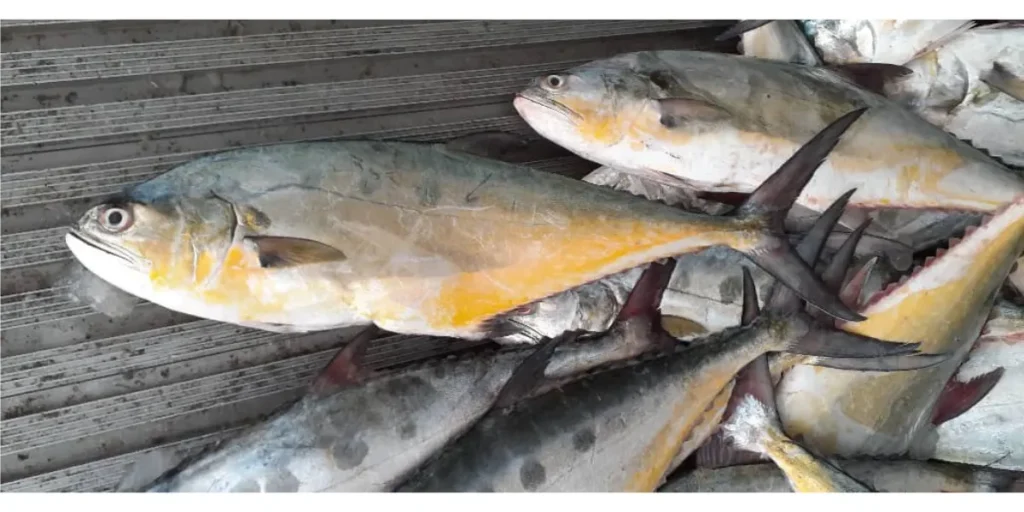
Time–Temperature Abuse: How Small Deviations Destroy Carangidae Shelf Life
Carangidae are particularly sensitive to temperature fluctuations, and this vulnerability becomes more pronounced during the Carangidae fishing season Iran, when ambient conditions are warm. Even short periods above 4°C accelerate microbial growth and biochemical breakdown, shortening shelf life dramatically. These fish contain higher histidine levels in their dark muscle, making them more susceptible to histamine formation when exposed to temperature abuse.
Time–temperature abuse also weakens the muscle structure by promoting enzymatic softening. The result is gaping fillets, dull coloration, and unpleasant odors that appear far earlier than expected. Because quality loss is cumulative, a small deviation early in the chain—such as leaving crates uncovered on deck for 15 minutes—can compound during transport and storage.
Using temperature loggers, insulated handling containers, and verified loading procedures reduces these risks. Operators should document each transfer point, especially during transport from landing sites to processing facilities. Building contingency plans for delays, heat exposure, or mechanical failures ensures minimal damage when unpredictable events occur.
Simply put, Carangidae do not forgive temperature mistakes. Precision handling is essential because even minor lapses can undermine the entire cold chain and compromise quality long before the product reaches market.
Controlling Histamine Formation in Carangidae Supply Chains
Histamine formation is one of the most critical risks in the Carangidae supply chain, particularly during the Carangidae fishing season Iran, when environmental temperatures rise and bacterial activity accelerates. Histamine-producing bacteria thrive when fish are held above 4°C, and once histamine forms, it cannot be removed by cooking or freezing. This makes prevention—not correction—the only effective strategy.
Implementing strict cold-chain controls from the moment of capture is essential. Rapid chilling, continuous temperature recording, and hygienic handling reduce bacterial proliferation. To complement these practices, processors should follow guidelines consistent with sustainable Carangidae fishing, ensuring that catch volumes remain manageable and fish are not left on deck longer than necessary.
Routine histamine testing, using rapid test kits or accredited laboratory methods, provides verification that handling standards are working. Training crews and transport teams to recognize early signs of temperature abuse further strengthens safety protocols.
Export markets often demand detailed documentation, including cooling logs, histamine test results, and handling procedures. Meeting these requirements not only protects consumers but also supports the long-term market reputation of Carangidae from Iran. The goal is simple: maintain control at every step so that histamine never has a chance to develop.
Optimised Storage Protocols for Fresh and Frozen Carangidae
Handling Carangidae properly after harvest determines how well the fish retains its natural flavor, texture, and safety during distribution. Fresh storage must start immediately, especially throughout the Carangidae fishing season Iran, when ambient temperatures are often higher than ideal. Fresh Carangidae should be stored between 0–2°C, ideally buried in a generous layer of flake ice. The ice-to-fish ratio—often recommended as 2:1—helps maintain consistent cooling, preventing localized warm spots that accelerate spoilage. The fish should never sit in meltwater; draining systems in storage boxes are essential to avoid softening of the flesh.
For frozen Carangidae, long-term quality depends on reaching core temperatures of –18°C or lower within the shortest possible time. Rapid freezing limits ice-crystal growth, which protects the muscle structure from damage during thawing. Blast freezers or plate freezers are commonly used in regions around the Persian Gulf, where processors need to handle high volumes rapidly. Throughout the Carangidae fishing season Iran, many suppliers rely on pre-frozen storage buffers to stabilize supply for export markets.
Proper airflow inside cold rooms, calibrated door seals, and routine temperature audits ensure that both fresh and frozen stock remain within safe boundaries. When these protocols are followed, Carangidae retains its premium quality through every stage of distribution.
Packaging and Insulation Solutions Tailored to Carangidae
Packaging plays a far greater role than simply containing fish—it is central to maintaining product quality during transport, particularly in warm climates seen during the Carangidae fishing season Iran. Carangidae are sensitive to temperature changes, so the ideal packaging must insulate, protect, and allow proper drainage. Expanded polystyrene (EPS) boxes remain one of the most reliable choices because of their lightweight structure and excellent thermal resistance. When lined with flake ice or gel packs, these boxes can keep core temperatures low for extended periods, even when shipments face handling delays.
For long-haul export routes, vacuum packaging or modified-atmosphere packaging (MAP) can extend shelf life by slowing microbial growth and oxidation. MAP is especially helpful for fillets, which otherwise deteriorate faster due to higher surface exposure. Insulated pallet covers and reflective thermal blankets provide additional protection during loading operations under intense sunlight—a common challenge during peak fishing periods.
Reusable polypropylene crates have gained popularity among coastal suppliers in Iran, offering both durability and improved stacking efficiency. Their smooth interior surfaces also support better hygiene control. Ultimately, the combination of strong insulation and smart packaging design ensures that Carangidae products reach markets with the same quality they had when first iced at sea.
Digital Monitoring, IoT and Shelf-Life Prediction for Carangidae
Digital tools have transformed how processors manage seafood logistics, and Carangidae is no exception. During the Carangidae fishing season Iran, IoT sensors provide real-time visibility over temperature fluctuations from vessel decks to inland cold rooms. Small Bluetooth or RFID-enabled loggers placed inside transport boxes continuously transmit data, creating an accurate temperature history for each shipment. This helps identify weak points in handling routines, such as brief delays during unloading or inconsistent truck temperatures.
Shelf-life prediction models, increasingly used by advanced processors, integrate this digital data with historical quality assessments. These models calculate remaining shelf life based on exposure time above critical temperatures. They also allow exporters to schedule shipments more intelligently, assigning the freshest batches to longer international routes.
Cloud dashboards used in cold-chain operations provide alerts when temperatures drift outside acceptable ranges, enabling crews to respond before damage occurs. During hot periods in the Carangidae fishing season Iran, these alerts become indispensable for preventing histamine risks. Over time, the collected data builds a performance baseline, helping companies refine their cold-chain strategy and minimize product losses.
Digital monitoring is no longer a luxury—it’s a practical necessity for anyone aiming to deliver consistent, premium-quality Carangidae to domestic and global buyers.
Regulatory & Standard Framework for Carangidae Cold Chain
Cold-chain management for Carangidae is governed by a mix of international food-safety guidelines and region-specific regulations. During the Carangidae fishing season Iran, compliance becomes particularly important, as warmer waters and higher landings increase the risk of spoilage and histamine formation. International standards—such as Codex Alimentarius codes for fish handling—outline acceptable temperature thresholds, hygienic handling practices, and monitoring techniques. These guidelines ensure that Carangidae remain safe for consumption during processing and distribution.
Export markets like the EU and Gulf Cooperation Council impose their own conditions, often requiring detailed traceability, documented temperature logs, and verified testing procedures. Import authorities pay close attention to histamine control, cleanliness at landing sites, and the reliability of cold-chain infrastructure. Iranian processors typically align their operations with these expectations to maintain smooth access to high-value markets.
National regulations in Iran also set operational requirements for fishing vessels, processing plants, and refrigerated transport. These frameworks help maintain industry-wide consistency, reducing public health risks. For businesses operating during the Carangidae fishing season Iran, following these standards is not just a regulatory obligation—it’s a commercial strategy. Compliance strengthens export reputation, protects consumer trust, and improves overall product quality.
Training, SOPs and Quality Index Methods for Carangidae
Cold-chain success relies heavily on people—those who handle, inspect, and transport Carangidae throughout its journey. During the Carangidae fishing season Iran, crews and plant workers must follow clear Standard Operating Procedures (SOPs) to ensure consistent cooling and hygienic handling. Training typically covers proper icing techniques, rapid chilling expectations, contamination prevention, and how to handle equipment such as RSW tanks or blast freezers. By making these procedures routine, processors minimize human errors that compromise quality.
Quality Index Methods (QIM) provide an objective way to evaluate freshness. These scoring systems assess sensory attributes such as eye clarity, gill color, skin brightness, odor, and texture. Workers trained in QIM can detect early signs of deterioration, allowing managers to isolate affected batches before they move further through the distribution chain.
Clear SOPs also guide teams in maintaining cleaning schedules, documenting temperature readings, and responding to deviations. During high-pressure periods of the Carangidae fishing season Iran, these frameworks prevent chaos by ensuring that every team member knows their role. Training isn’t a one-time event—it’s an ongoing commitment that protects both product integrity and operational efficiency.
KPIs and Continuous Improvement in Carangidae Cold Chains
Measuring performance is vital for ensuring that Carangidae maintain premium quality throughout the supply chain. Effective Key Performance Indicators (KPIs) track variables that directly affect freshness, including temperature stability, icing efficiency, transport times, and incident rates of histamine non-compliance. During the Carangidae fishing season Iran, these KPIs help companies manage large incoming volumes without compromising on quality.
Temperature deviation frequency is one of the most important indicators. Tracking how often and how long temperatures exceed safe thresholds reveals weaknesses in equipment or procedures. Other KPIs include average time to chilling after harvest, cold-room loading density, and percentage of shipments that arrive within ideal sensory parameters. Customer complaints, return rates, and microbiological test results also serve as valuable feedback loops.
Continuous improvement builds on this data by identifying root causes and implementing corrective actions. Adjusting ice-to-fish ratios, upgrading insulation materials, or increasing staff training frequency can all raise system performance. Over time, companies relying on data-driven improvements create a cold chain that is more reliable, more sustainable, and more competitive—especially during the demanding conditions of the Carangidae fishing season Iran.
Final Insights on Managing an Effective Carangidae Cold Chain
Building an efficient cold chain isn’t just a technical requirement—it’s the foundation of delivering premium-quality Carangidae products. Every stage, from catch to distribution, can either strengthen or undermine the final quality. When a well-structured Carangidae cold chain is in place, it reflects a series of precise decisions about cooling speed, packaging methods, storage capacity, and temperature-stability strategies—each directly influencing shelf life, microbial safety, and sensory value.
Proper cold-chain control for Carangidae not only prevents histamine development and maintains the fish’s natural firmness, but also reduces waste, boosts customer satisfaction, and supports a stronger brand presence in competitive markets. More importantly, applying scientific principles to the Carangidae cold chain allows producers to predict quality more accurately, plan shipments efficiently, and minimize commercial risks.
Ultimately, if your goal is to deliver a product that truly reflects the freshness of the sea, adhering to a standardized cold-chain system isn’t optional—it’s a professional obligation. This approach ensures consistency, safeguards food safety, and reinforces your long-term position in both domestic and international markets.
FAQ
1. When does the Carangidae fishing season Iran typically occur?
It usually aligns with warmer months when Carangidae migrate closer to coastal waters, but exact timing depends on regional environmental conditions.
2. Why is temperature control so important for Carangidae?
Carangidae spoil faster than many white fish due to higher muscle activity and lipid content, making them highly sensitive to even small temperature fluctuations.
3. What is the ideal storage temperature for fresh Carangidae?
Fresh Carangidae should be kept between 0–2°C and fully surrounded with clean, high-quality ice.
4. How can histamine formation be prevented?
Rapid chilling, hygienic handling, and continuous temperature monitoring from vessel to retail are the most effective preventive measures.
5. What packaging works best for Carangidae?
EPS boxes with flake ice, gel packs, or MAP systems offer strong insulation and are commonly used for both domestic and export markets.
6. Why are digital monitoring tools useful in the Carangidae cold chain?
They provide real-time temperature data, detect deviations early, and help predict shelf life more accurately.
7. Are export regulations strict for Carangidae?
Yes. Markets such as the EU and GCC require validated temperature logs, traceability documentation, and strict histamine control measures.