Precision is the real answer when it comes to improving Water Salinity in Sturgeon Farming Quality. From the very first stages of growth, salinity directly shapes how sturgeon regulate stress, convert feed into biomass, and maintain long-term health. Even minor deviations in salt concentration can alter metabolism, weaken immune response, and reduce overall production efficiency. This is why professional farms no longer treat salinity as a background parameter, but as a strategic management tool.
In modern aquaculture, especially in export-oriented supply chains linked to Seafood Logistics from IranWater Salinity in Sturgeon Farming Quality, consistent water conditions are essential for meeting international quality standards. Stable salinity supports predictable growth cycles, reduces mortality risks, and improves final product uniformity—both in meat texture and caviar development.
Understanding how salinity interacts with temperature, oxygen, and feeding regimes allows farmers to make informed, science-based decisions. In the following sections, we explore how proper salinity control transforms sturgeon farming from basic production into a high-quality, market-ready operation. Stay with us to see how small adjustments can deliver measurable results.
Understanding Salinity: Definitions and Measurement in Aquaculture
In professional aquaculture, water salinity is not a vague concept—it is a measurable, controllable production variable. Salinity refers to the concentration of dissolved salts in water, usually expressed in parts per thousand (ppt or ‰). In sturgeon farming, even small shifts in salinity can influence osmoregulation, feeding behavior, and stress tolerance, which directly impacts Water Salinity in Sturgeon Farming Quality.
Modern farms rely on accurate tools such as conductivity meters and digital probes to monitor salinity in real time. This level of precision is especially important in systems producing high-value products like Scallops & Caviar, where consistency and biological stability define market acceptance.
Common salinity measurement methods include:
- Handheld digital salinity meters
- Inline conductivity sensors (used in RAS systems)
- Laboratory water analysis for long-term trend tracking
| Measurement Tool | Accuracy Level | Best Use Case |
| Handheld meter | Medium–High | Daily checks |
| Inline sensors | High | Continuous monitoring |
| Lab analysis | Very High | System calibration |
Accurate salinity data allows farmers to anticipate biological stress before visible symptoms appear. Rather than reacting to losses, farms that prioritize measurement build predictable, scalable production models—an essential foundation for sustainable sturgeon aquaculture.
Species-Specific Salinity Tolerance of Sturgeon
Not all sturgeon respond to salinity in the same way. Species-specific tolerance is one of the most overlooked factors affecting Water Salinity in Sturgeon Farming Quality. While sturgeon are generally classified as freshwater fish, many species evolved in environments with seasonal or partial salinity exposure.
For example, Siberian sturgeon (Acipenser baerii) thrive best in freshwater, whereas Russian sturgeon (Acipenser gueldenstaedtii) can tolerate low brackish conditions when acclimated gradually. Ignoring these biological limits often results in reduced growth and inconsistent product quality—issues that later surface in consumer perception, especially when buyers ask, “What Does Caviar Tastes Like?”
Typical tolerance ranges:
- Juvenile sturgeon: 0–2 ppt (optimal)
- Sub-adult stages: up to 5 ppt (species-dependent)
- Short-term tolerance: higher levels only under controlled conditions
Gradual adaptation is critical. Sudden salinity changes disrupt ion balance and increase mortality risk. Farms that align salinity targets with species biology consistently outperform those using generalized water standards. In practice, tailoring salinity to species is not a luxury—it is a requirement for quality-driven production.
How Salinity Influences Growth, Metabolism, and Health
Salinity directly determines how much energy a sturgeon must allocate to basic survival. When salinity deviates from the optimal range, fish redirect energy away from growth toward osmoregulation, lowering feed efficiency and slowing biomass gain. This biological trade-off is central to Water Salinity in Sturgeon Farming Quality.
From a metabolic standpoint, improper salinity increases cortisol levels, weakens immune response, and raises susceptibility to bacterial infections. Over time, these hidden stresses reduce survival rates and extend production cycles—two costly outcomes for commercial farms.
Key physiological impacts include:
- Reduced feed conversion ratio (FCR)
- Slower growth velocity
- Increased disease vulnerability
- Lower stress recovery capacity
These effects extend beyond the farm. Product integrity matters when sturgeon are destined for culinary applications, whether in fine dining or recipes such as Lemon Spaghetti with Caviar Recipe, where texture and flavor consistency are essential.
Healthy fish grow predictably, mature evenly, and produce higher-quality roe. Salinity, when managed correctly, becomes a silent driver of efficiency rather than a recurring risk factor.
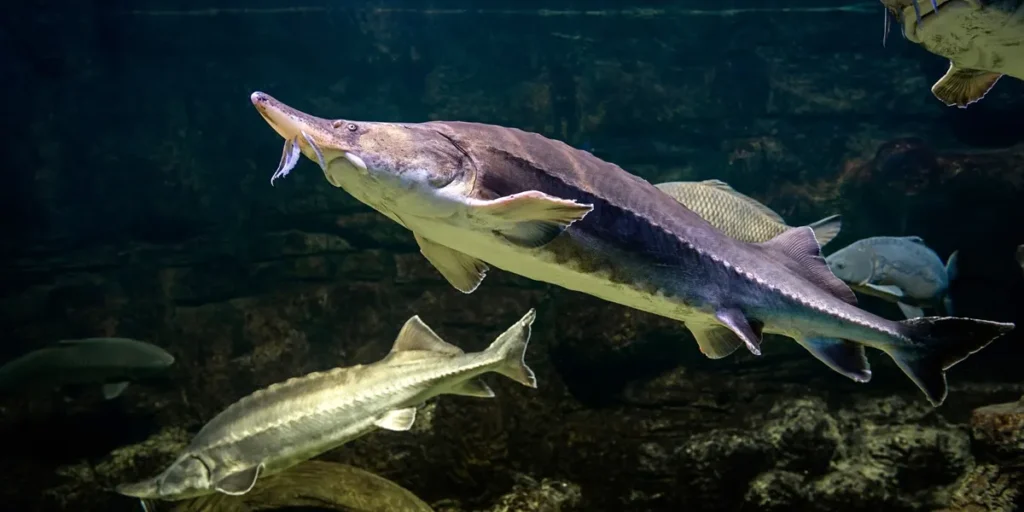
Molecular and Genetic Responses to Salinity Stress
Recent scientific studies reveal that salinity stress does not only affect sturgeon externally—it triggers measurable changes at the molecular level. Variations in salinity alter gene expression related to ion transport, oxidative stress, and immune regulation. These mechanisms are now recognized as core contributors to Water Salinity in Sturgeon Farming Quality.
When salinity exceeds species-specific tolerance, sturgeon activate stress-response genes, increasing metabolic demand. Prolonged activation leads to reduced growth performance and compromised reproductive development. This is particularly relevant in broodstock management for premium caviar lines, including brands such as Caviar by Pishva Holding, where biological precision defines product reputation.
Key genetic responses include:
- Upregulation of ion transporter genes
- Increased oxidative stress markers
- Suppression of growth-related pathways
Understanding these responses allows farms to shift from reactive management to preventive strategy. Instead of waiting for visible health decline, salinity thresholds can be adjusted based on known biological limits. Genetics confirms what experienced farmers already observe: stable salinity equals stable performance.
Practical Management: Monitoring and Controlling Salinity
Effective salinity management is built on consistency, not correction. Farms that succeed in maintaining Water Salinity in Sturgeon Farming Quality rely on structured monitoring systems rather than occasional testing. Daily tracking allows early detection of trends before they become problems.
Best monitoring practices include:
- Fixed measurement times each day
- Automated alerts in RAS facilities
- Cross-checking salinity with temperature and oxygen data
| Management Action | Purpose |
| Gradual water exchange | Prevents osmotic shock |
| Sensor calibration | Ensures data accuracy |
| Data logging | Identifies seasonal trends |
Control strategies must be proactive. Sudden dilution or salinity spikes often cause more harm than slow deviation. Successful farms treat salinity like nutrition: adjusted carefully, documented consistently, and evaluated over time.
Best Practices for Salinity in Different Farming Systems
Salinity behavior varies significantly across farming systems. What works in open ponds may fail in recirculating aquaculture systems (RAS). Understanding system-specific dynamics is essential for maintaining Water Salinity in Sturgeon Farming Quality.
System-based considerations:
- Pond systems: Influenced by evaporation and rainfall
- RAS systems: Salinity accumulates over time
- Flow-through systems: Salinity tied to source water stability
In RAS environments, low water exchange rates mean minerals gradually build up. Without periodic correction, salinity drifts upward unnoticed. Pond systems face the opposite challenge—rapid dilution after heavy rainfall. Best practice involves aligning salinity targets with system design, species biology, and production stage. There is no universal number—only controlled ranges supported by monitoring and experience.
Impact of Salinity on Sturgeon Product Quality
Salinity does not stop influencing sturgeon at harvest—it shapes the final product. Muscle texture, fat distribution, and roe development are all indirectly linked to long-term salinity exposure. This makes Water Salinity in Sturgeon Farming Quality a commercial issue, not just a biological one.
Consistent salinity supports:
- Uniform meat firmness
- Predictable roe maturation
- Stable biochemical composition
Markets that value premium caviar demand consistency across batches. Farms that control salinity effectively reduce variation, improve shelf stability, and strengthen brand trust. In high-value aquaculture, quality is cumulative—and salinity is one of its quiet foundations.
Conclusion: Turning Salinity Control into a Competitive Advantage
Consistency is what separates average sturgeon farms from high-performing ones, and water salinity plays a central role in achieving it. When salinity is managed within species-specific optimal ranges, sturgeon experience lower physiological stress, improved feed efficiency, and stronger disease resistance. Over time, these benefits translate into healthier stocks, more stable production cycles, and higher-value outputs.
From a commercial perspective, salinity control is not just a biological concern—it is a quality assurance strategy. Farms involved in international trade and cold-chain distribution, including networks connected to Seafood Logistics from IranWater Salinity in Sturgeon Farming Quality, depend on uniform growth and predictable harvest outcomes. Poor salinity management can compromise product consistency, increasing losses before fish ever reach the market.
Effective salinity management relies on continuous monitoring, gradual adjustments, and integration with other water quality parameters such as dissolved oxygen and pH. Rather than reacting to problems, successful farms use data to prevent them. In an industry where margins are shaped by efficiency and quality, mastering Water Salinity in Sturgeon Farming Quality is no longer optional—it is a practical, science-driven advantage that supports long-term sustainability and global competitiveness.
FAQ
1. What is the ideal salinity range for sturgeon farming?
Most sturgeon species perform best between 0–2 ppt, depending on age and species.
2. Can sturgeon survive in brackish water?
Some species can tolerate low salinity if acclimated gradually, but long-term exposure requires careful management.
3. How often should salinity be measured?
Daily measurement is recommended, with continuous monitoring in RAS systems.
4. Does salinity affect caviar quality?
Yes. Long-term salinity stability supports consistent roe development and texture.
5. Is salinity more important than temperature?
Both are critical. Salinity and temperature interact and should be managed together, not in isolation.