Threonine is an essential amino acid that poultry must obtain from its diet to support growth, protein synthesis, and intestinal health. Unlike some nutrients that birds can produce internally, threonine cannot be synthesized in sufficient amounts, making an adequate dietary supply essential for efficient production. So, what is threonine actually doing inside a bird’s body? Its role extends beyond muscle and tissue development. Threonine contributes to protein formation and is particularly important for producing mucin, a key component of the protective mucus layer lining the gastrointestinal tract. This makes it closely connected with intestinal integrity, nutrient utilization, and overall bird performance. For poultry producers and feed formulators, understanding What Is Threonine and how much birds need at different growth stages can help create better-balanced diets and avoid unnecessary feed costs. In this article, we will examine its functions, dietary requirements, effects on growth and gut health, and practical considerations for using threonine in poultry nutrition.
What Is Threonine? Understanding This Essential Amino Acid in Poultry Diets
Threonine is an essential amino acid that poultry must obtain from feed because birds cannot produce enough of it to meet their physiological needs. It is involved in protein synthesis and is especially important for maintaining the intestinal tract. In practical poultry nutrition, threonine is generally recognized as one of the limiting amino acids, meaning that an inadequate supply can restrict the efficient use of other nutrients and affect bird performance.
So, what is threonine doing beyond supporting protein formation? A significant part of its nutritional importance comes from its use in intestinal proteins, particularly mucins. These proteins form part of the mucus layer that protects the intestinal surface.
For feed manufacturers and poultry producers, the key points are:
- Essential nutrient: It must be supplied through the diet.
- Protein synthesis: It contributes to the formation of body proteins and tissues.
- Intestinal function: It is heavily involved in the production of intestinal mucins.
- Feed formulation: Its level should be considered alongside other essential amino acids.
The biological form used by poultry is L-threonine, which is commonly available as a crystalline feed-grade amino acid. When formulating diets, digestible threonine is more useful than simply looking at total threonine because it better reflects the amount available to the bird.
For producers evaluating feed ingredients, Pishva Holding can also be a useful resource when sourcing nutritional inputs and feed additives for poultry production.
Why Is Threonine Essential for Broiler Growth and Protein Synthesis?
Adequate threonine helps broilers turn dietary nutrients into body tissue efficiently. Like other essential amino acids, threonine is incorporated into proteins required for growth and normal physiological functions. If the diet does not provide enough of a limiting amino acid, protein synthesis cannot proceed as efficiently, even when energy and crude protein are available.
This is why broiler diets should not be evaluated by crude protein alone. Two feeds can contain similar protein percentages but differ considerably in their available amino acid profiles. A balanced supply of digestible amino acids allows birds to use dietary protein more effectively.
Research in broilers has also linked appropriate threonine levels with growth performance, feed efficiency, intestinal development, and immune-related responses. However, supplementation should not be viewed as a case of “more is always better.” Both inadequate and excessive amino acid levels can create an imbalance in the diet.
In practical formulation, several factors should therefore be considered:
- Bird age: Amino acid requirements change as broilers grow
- Digestible threonine: Indicates the fraction available for metabolism
- Lysine level: Threonine is commonly expressed relative to lysine
- Dietary protein : Lower-protein diets require careful amino acid balancing
- Other amino acids: A different limiting amino acid can restrict the response
For companies handling specialized feed ingredients internationally, Specialized Import Services can support the sourcing process. The important point is that threonine supplementation should always be based on the complete feed formulation rather than a single nutrient in isolation.
Threonine and Gut Health: Why It Matters Beyond Muscle Growth
One of the most important reasons poultry nutritionists pay close attention to threonine is its direct connection with intestinal health. The digestive tract has a high demand for amino acids because intestinal cells, mucus, enzymes, and immune components are continually being produced and renewed.
Threonine is particularly important because it is a major component of mucin, the glycoprotein that forms the protective mucus layer over the intestinal epithelium. This layer helps separate intestinal contents from the epithelial surface and contributes to the first line of defense against potentially harmful substances and microorganisms.
Research has found that dietary threonine can influence several indicators of intestinal health, including mucin-related gene expression, goblet cell density, villus development, and immune markers. In broilers, supplementation has also been associated with improvements in intestinal morphology under certain experimental conditions.
This matters because healthy intestinal tissue supports:
- More effective nutrient absorption
- Maintenance of the intestinal barrier
- Normal mucus production
- Local immune defense
- Consistent digestive performance
Recent research published in 2026 adds another dimension. In young broilers, moderate L-threonine supplementation was associated with improved jejunal morphology, changes in cecal microbial diversity, and increased expression of genes involved in intestinal barrier function.
For businesses involved in feed ingredient logistics, Customs Clearance can be relevant when importing specialized nutritional ingredients. However, the nutritional value of threonine ultimately depends on using it at an appropriate level within a properly balanced diet.
How Does Threonine Support the Intestinal Barrier and Mucin Production?
Threonine supports the intestinal barrier largely through its contribution to mucin production and the maintenance of intestinal tissues. Mucin is produced by specialized intestinal goblet cells and forms a mucus layer over the epithelial surface. Because threonine is an important component of mucin proteins, inadequate availability can place additional pressure on the intestine’s ability to maintain this protective layer.
Studies in poultry have demonstrated that dietary threonine can affect MUC2, a major intestinal mucin, as well as other markers associated with mucosal immunity and barrier function. Research in laying hens found increased MUC2 expression following threonine supplementation, while broiler studies have reported changes in goblet cells, villus structure, and barrier-related proteins.
The practical relationship can be summarized as follows:
Dietary threonine → mucin synthesis → mucus-layer maintenance → intestinal protection
This does not mean that simply adding more threonine will automatically improve gut health. The response depends on the bird’s baseline diet, age, health status, environmental conditions, and overall amino acid balance. In fact, research indicates that both deficiency and excessive dietary threonine can affect intestinal function differently.
For producers looking to Buy L-Threonine for Livestock and Poultry Feed, the quality and specification of the feed-grade product matter, but so does the formulation strategy. L-threonine should be incorporated according to the digestible amino acid requirements of the birds rather than used as a standalone solution for intestinal problems.
How Does Threonine Affect Feed Conversion, Weight Gain, and Broiler Performance?
Threonine can influence broiler performance by helping birds use dietary protein efficiently and maintain healthy intestinal function. When the diet provides an adequate amount of digestible threonine, birds can direct amino acids toward tissue protein synthesis rather than compensating for an imbalance in the feed. This can support body weight gain and feed conversion, although the response depends on the overall formulation.
Research has reported improvements in growth and feed utilization when threonine was supplied above baseline recommendations in some broiler diets. However, results are not identical across studies. The benefit depends on factors such as bird age, dietary protein, amino acid balance, and environmental conditions.
When evaluating the effect of threonine, producers should monitor several indicators together:
- Body weight gain: Shows whether birds are achieving expected growth.
- Feed intake: Helps identify whether dietary changes affect appetite.
- Feed conversion ratio (FCR): Indicates how efficiently feed is converted into body weight.
- Mortality and flock uniformity: Provide additional context for performance results.
- Intestinal health: Can explain performance changes that are not visible from weight gain alone.
The practical lesson is simple: increasing threonine does not automatically improve FCR. It should be adjusted as part of a balanced amino acid profile and evaluated against actual flock performance.
Threonine Requirements Change With Age, Diet Composition, and Production Conditions
There is no single threonine level that is ideal for every broiler diet. A bird’s requirement changes as it moves through different growth stages because its rates of tissue deposition, feed intake, and nutrient utilization also change. The composition of the diet matters as well. Protein concentration, amino acid balance, ingredient digestibility, and the ratio of threonine to lysine can all influence the amount of available threonine required.
This is why nutritionists generally work with digestible amino acid requirements rather than relying only on total dietary concentrations. Recent poultry-nutrition literature continues to identify threonine as an important limiting amino acid and emphasizes the importance of considering it within the complete amino acid profile.
| Factor | Effect on threonine formulation |
| Bird age | Requirements change as growth and tissue deposition change |
| Dietary protein | Lower-protein diets require more precise amino acid balancing |
| Lysine level | Threonine is commonly evaluated relative to lysine |
| Ingredient quality | Digestibility determines how much threonine is actually available |
| Health status | Intestinal challenges can increase the importance of threonine |
| Environmental stress | Heat and other stressors can alter nutrient utilization |
For this reason, understanding What Is Threonine is only the first step. Proper formulation requires knowing how much digestible threonine the particular flock needs under its actual production conditions.
Can Higher Threonine Levels Help Chickens Under Heat and Other Stress Conditions?
Higher threonine levels may help chickens cope with some forms of stress, but supplementation is not a universal solution for heat stress. High temperatures reduce feed intake and can interfere with nutrient utilization, intestinal integrity, and overall growth. Because birds consume less feed during heat stress, maintaining an adequate supply of essential amino acids becomes particularly important.
Threonine is of particular interest because of its role in intestinal mucin production and barrier function. Experimental research under multiple stress conditions has found that increasing digestible threonine improved FCR and supported indicators of intestinal health.
However, the response is not always positive for growth. A recent study of broilers exposed to cyclic heat stress found that high threonine supplementation improved selected indicators of oxidative status and intestinal health but did not improve body weight gain or feed intake.
This distinction is important when formulating a practical diet. Under heat stress, nutrition should be viewed as part of a broader management strategy that includes:
- Reliable access to cool, clean water
- Adequate environmental ventilation
- Appropriate dietary energy density
- Balanced digestible amino acids
- Control of stocking density and other environmental stressors
Therefore, increasing threonine may support resilience in certain situations, but it should complement—not replace—effective heat-stress management.
What Happens When Poultry Diets Are Deficient in Threonine?
A threonine deficiency can limit growth and compromise functions that depend on continuous protein synthesis, particularly in the intestinal tract. Because threonine is an essential amino acid, birds cannot simply manufacture enough of it when dietary supply falls short. The consequences become more important when the deficiency is significant or persists over time.
In broilers, inadequate threonine has been associated with poorer growth, reduced feed efficiency, and changes in intestinal and immune function. This is partly explained by the high demand for threonine in intestinal proteins such as mucins. Research has shown that appropriate threonine supplementation can influence MUC2 expression, intestinal morphology, antioxidant status, and immune-related responses.
A deficient diet may therefore lead to several practical problems:
- Slower body weight gain
- Less efficient feed utilization
- Reduced support for intestinal mucus production
- Changes in intestinal barrier function
- Potential impairment of immune responses
It is also important not to diagnose a threonine deficiency from one performance problem alone. Poor growth or FCR can result from inadequate energy, another limiting amino acid, disease, poor feed quality, or environmental stress.
The best approach is to review the complete feed formulation and compare digestible threonine with the requirements appropriate for the bird’s age, strain, diet, and production conditions. This is where understanding What Is Threonine becomes useful in practice: the goal is not simply to add an amino acid, but to maintain the right nutritional balance for consistent flock performance.
How Should Threonine Be Balanced With Other Amino Acids in Poultry Feed?
Threonine works best when it is balanced with the rest of the amino acid profile rather than considered on its own. In practical poultry nutrition, threonine is commonly evaluated relative to lysine through the ideal protein concept. Lysine is used as the reference amino acid, and the requirements for threonine, methionine, valine, and other amino acids are expressed as proportions of digestible lysine. This approach helps prevent one amino acid from becoming limiting while others are supplied in excess.
For broilers, commonly cited ideal-protein patterns place digestible threonine at roughly two-thirds of digestible lysine, although the appropriate ratio varies with age, genotype, production target, and formulation system.
A practical formulation should therefore consider:
- Digestible lysine and threonine together
- Methionine plus cysteine
- Valine and isoleucine
- Dietary crude protein
- Amino acid digestibility
- The bird’s production stage
The important point is that answering What Is Threonine is only the beginning. If another essential amino acid becomes limiting, adding more threonine may produce little additional benefit. A balanced amino acid profile is more useful than maximizing any single nutrient.
L-Threonine vs. Dietary Protein: When Is Supplementation Useful?
L-threonine supplementation is most useful when the existing feed ingredients do not provide enough available threonine to meet the bird’s requirement efficiently. Simply increasing crude protein is not always the best solution. A diet can contain substantial protein while still having an amino acid imbalance, particularly when protein sources and their digestibility differ.
Feed-grade L-threonine provides a concentrated source of the biologically active amino acid. It can therefore help nutritionists correct a specific deficiency without substantially increasing total dietary protein. This becomes particularly valuable when formulating lower-protein diets while maintaining an appropriate essential amino acid profile. Threonine is recognized as one of the major limiting amino acids in poultry diets, particularly in many plant-based formulations.
The difference can be viewed practically:
| Approach | Main consideration |
| Increase dietary protein | Adds threonine along with many other amino acids |
| Add L-threonine | Precisely increases available threonine |
| Balance digestible amino acids | Targets the actual nutritional requirement |
However, L-threonine should not be used simply because a higher inclusion rate appears beneficial in another study. Requirements vary with bird age, diet composition, and production conditions. The complete formulation should be assessed first.
How Can Poultry Producers Determine Whether a Threonine Level Is Adequate?
The best way to evaluate threonine adequacy is to combine feed-formulation data with actual flock performance. Looking at the threonine percentage alone does not tell the whole story. Producers and nutritionists need to know whether the value represents total or digestible threonine and whether it matches the requirements of the specific birds being fed.
A useful evaluation should include:
- Check the feed formulation. Review digestible threonine alongside digestible lysine and the other essential amino acids.
- Consider bird age and production stage. Requirements are not identical during starter, grower, and finisher phases.
- Monitor performance. Track body weight gain, feed intake, FCR, and flock uniformity.
- Review intestinal health. Changes in gut condition can affect how effectively birds utilize nutrients.
- Assess the production environment. Heat stress, disease pressure, and other challenges can change nutritional priorities.
Research has shown that threonine responses can differ depending on the performance parameter being measured. In some studies, supplementation improved intestinal barrier markers without producing the same magnitude of improvement in growth.
This is why there is no single test that answers What Is Threonine adequacy for every flock. A good assessment considers the diet, the birds, and the production results together.
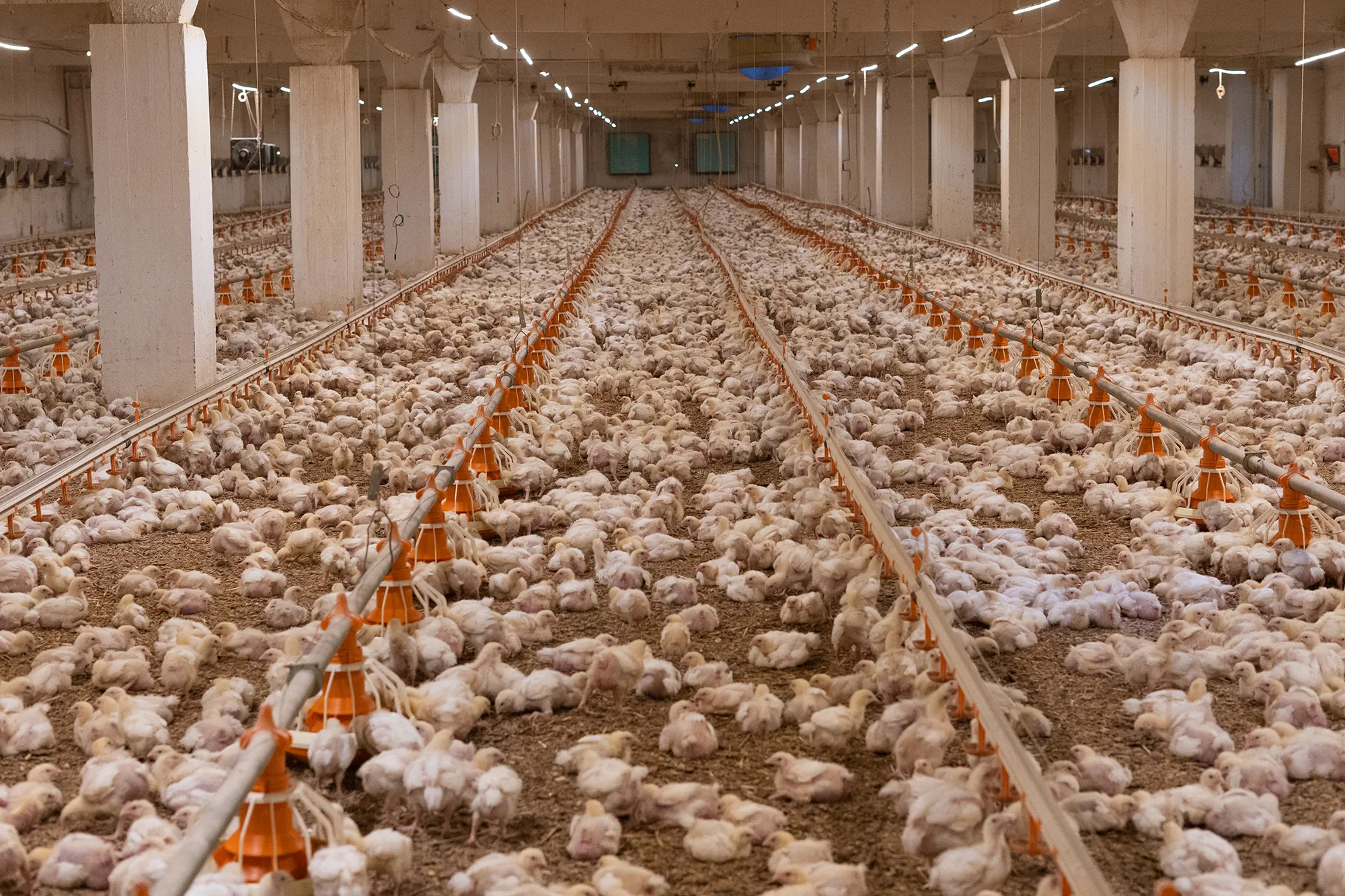
The Bottom Line: Why Threonine Is Critical for Modern Poultry Nutrition
Threonine is much more than another number on a poultry feed formulation sheet. It supports protein synthesis while also contributing significantly to intestinal function, mucin production, immune activity, and maintenance of the gut barrier. These roles explain why threonine remains an important consideration when formulating efficient diets for modern poultry production.
Its importance becomes particularly clear when diets are formulated with lower crude protein. Rather than increasing total protein unnecessarily, nutritionists can use crystalline amino acids to bring the digestible amino acid profile closer to the bird’s actual requirements. This can help improve nutrient utilization and reduce excess nitrogen excretion when the overall formulation is properly balanced.
The main practical lessons are:
- Threonine must be supplied through the diet.
- Digestible threonine is more useful for formulation than total content alone.
- Its requirement changes with bird age and production conditions.
- It should be balanced with lysine and other essential amino acids.
- Gut health is an important part of its nutritional role.
- More threonine is not automatically better.
Ultimately, understanding What Is Threonine helps producers move beyond crude-protein targets and toward more precise amino acid nutrition.
Conclusion: Why Threonine Matters in Poultry Nutrition
A well-balanced threonine supply can make a meaningful difference in both poultry growth and intestinal health. Understanding What Is Threonine is therefore not simply a matter of defining another amino acid. Threonine plays several interconnected roles that directly affect how efficiently birds use nutrients and maintain healthy tissues. It is required for protein synthesis and supports the development of body tissues, but its importance becomes particularly clear in the gastrointestinal tract, where it contributes to mucin production and helps maintain the intestinal barrier.
For feed formulators, the practical goal is not to add as much threonine as possible. The objective is to provide an appropriate amount based on the bird’s age, production stage, dietary composition, and environmental conditions. Threonine should also be considered alongside other essential amino acids because an imbalance elsewhere in the diet can limit the response to supplementation. Using digestible amino acid values and an ideal-protein approach can make this process more precise.
Ultimately, effective threonine nutrition combines accurate formulation with regular monitoring of growth, feed conversion, feed intake, and bird health. When these factors are considered together, threonine can contribute to more efficient poultry production and better nutritional management.
FAQ
- What is threonine in poultry feed?
Threonine is an essential amino acid used by poultry for protein synthesis, intestinal maintenance, mucin production, and other physiological functions. Birds must obtain sufficient threonine from their diet because they cannot synthesize enough to meet their needs.
- Why is threonine important for broilers?
Threonine supports tissue protein synthesis and has an important role in intestinal health. Adequate dietary levels can contribute to efficient growth and feed utilization when the rest of the amino acid profile is properly balanced.
- Is L-threonine better than increasing crude protein?
Not necessarily “better,” but it can be more precise. L-threonine allows a nutritionist to increase available threonine without substantially increasing total dietary protein. This can be useful when correcting a specific amino acid limitation.
- What happens if poultry diets are low in threonine?
A significant deficiency can restrict protein synthesis, reduce growth performance, impair feed efficiency, and compromise intestinal functions that depend on threonine, including mucin production.
- Can too much threonine be harmful?
More is not necessarily better. Excessive supplementation can disrupt the amino acid balance and increase feed costs without producing a proportional performance benefit. The appropriate level should be determined from the complete formulation.
- How is threonine balanced in poultry feed?
Threonine is commonly balanced against digestible lysine as part of an ideal-protein approach. Other amino acids, dietary protein, bird age, and production conditions must also be considered.
- Does threonine improve gut health?
It can support intestinal health because threonine is an important component of mucin. Studies have reported effects on MUC2 expression, intestinal morphology, barrier-related markers, and immune responses under specific dietary or environmental conditions.
- Can threonine help chickens during heat stress?
It may help support intestinal and metabolic responses during heat stress, but it should not be considered a standalone treatment. Proper ventilation, water availability, environmental management, energy supply, and overall amino acid balance remain essential.