Choosing the right L-threonine supplement can improve feed efficiency, support animal growth, and help producers meet nutritional requirements without adding unnecessary protein to the diet. When you buy L-Threonine for Livestock and Poultry Feed, focus on product purity, digestibility, quality documentation, and suitability for your feed formulation rather than price alone.
L-threonine is an essential amino acid that animals cannot synthesize in sufficient quantities to meet their nutritional needs. It plays an important role in protein synthesis and supports intestinal health through its contribution to mucin production. These functions make it particularly valuable in poultry diets and in carefully balanced feed formulations for pigs and other livestock.
Several factors influence the right purchasing decision, including the animal species, growth stage, existing dietary amino acid levels, and the concentration of the product. Buyers should also check the certificate of analysis (COA), manufacturing specifications, packaging options, and supplier reliability before placing an order.
Whether you need a small quantity for feed production or a bulk shipment for commercial operations, understanding these details can help you control costs while maintaining consistent feed quality. Read on to explore L-threonine specifications, pricing factors, practical applications, and the key considerations for choosing a reliable supplier.
What Is L-Threonine and Why Is It Used in Livestock and Poultry Feed?
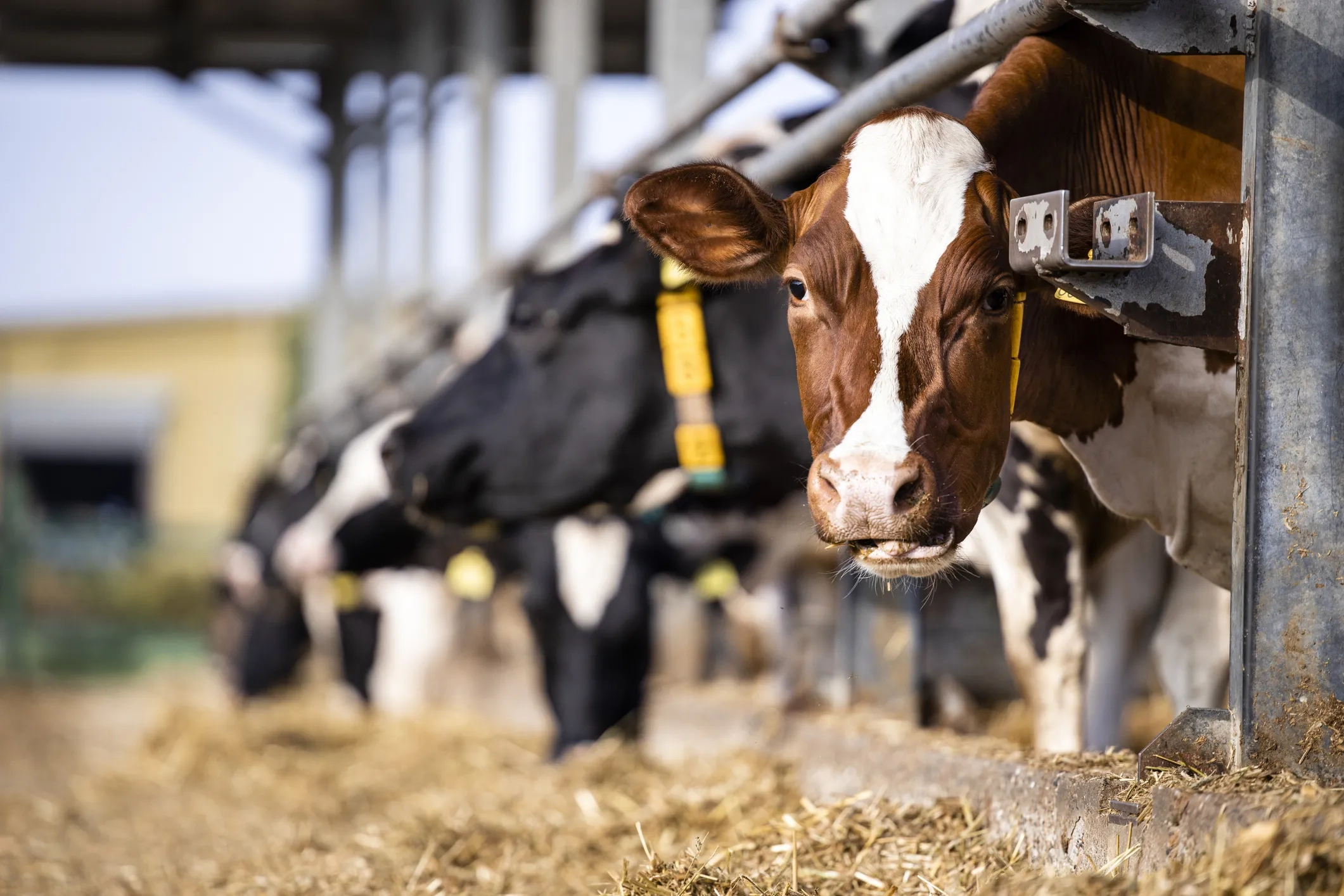
L-threonine is an essential amino acid used in animal nutrition to support protein synthesis, normal growth, and efficient feed utilization. Because animals cannot produce enough threonine to meet their nutritional needs, it must be supplied through feed ingredients or nutritional supplements. In commercial livestock and poultry production, supplementing this amino acid can help balance the diet and improve the precision of feed formulation.
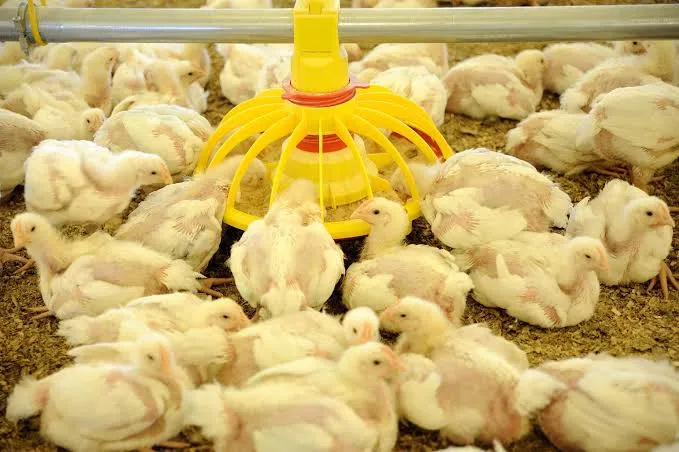
Threonine is particularly important in poultry diets, where amino acid balance directly affects growth and production performance. It also contributes to the production of mucin, a component of the protective mucus layer lining the digestive tract. Pigs and other livestock require adequate threonine for protein deposition, tissue maintenance, and normal physiological functions.
Feed manufacturers commonly use L-threonine when formulating diets with lower crude protein levels. By supplying limiting amino acids in appropriate proportions, nutritionists can reduce reliance on high-protein ingredients without compromising essential amino acid requirements. However, the results depend on the digestible amino acid content of the entire diet, not simply the amount of threonine added.
When planning to Buy L-Threonine for Livestock and Poultry Feed, buyers should consider the target animal species, production stage, feed formulation, and product specifications. Businesses sourcing feed additives through suppliers such as Pishva Holding should evaluate product documentation and supply requirements before purchasing.
Key Benefits of L-Threonine for Poultry Growth, Gut Health, and Feed Efficiency
Adequate threonine supply helps poultry meet their amino acid requirements during growth and production. Its benefits are most apparent when the existing diet does not provide enough digestible threonine relative to the bird’s nutritional needs. Supplementation should therefore be based on feed analysis and an appropriate formulation rather than a fixed dose for every flock.
One important function of threonine is its contribution to mucin production. Mucin helps maintain the protective mucus layer in the intestinal tract, which supports the gut barrier and normal digestive function. Threonine is also required for protein synthesis, making it relevant to tissue development and the efficient use of dietary nutrients.
In a properly balanced ration, supplemental L-threonine may help feed manufacturers achieve several practical goals:
- Support growth performance: Adequate amino acid intake helps birds develop muscle and other body tissues.
- Maintain intestinal function: Threonine contributes to mucin production and the maintenance of the intestinal barrier.
- Improve feed formulation: Supplementation can help correct a dietary amino acid deficiency without unnecessarily increasing crude protein.
- Support production efficiency: Correcting a limiting amino acid may improve performance when the rest of the diet meets the birds’ requirements.
- Manage feed costs: More precise formulation may reduce dependence on expensive protein ingredients, depending on ingredient prices and the overall ration.
These benefits are not automatic. Excess supplementation does not necessarily improve growth or feed conversion, and deficiencies in other essential amino acids can limit the response to threonine.
For businesses arranging Specialized Import Services, product selection should align with the nutritional specifications and purchasing requirements of the intended feed application. The goal is to secure a consistent feed-grade ingredient that fits the formulation, not simply to purchase the highest available concentration.
L-Threonine Feed Grade Specifications: Purity, Appearance, and Quality Standards
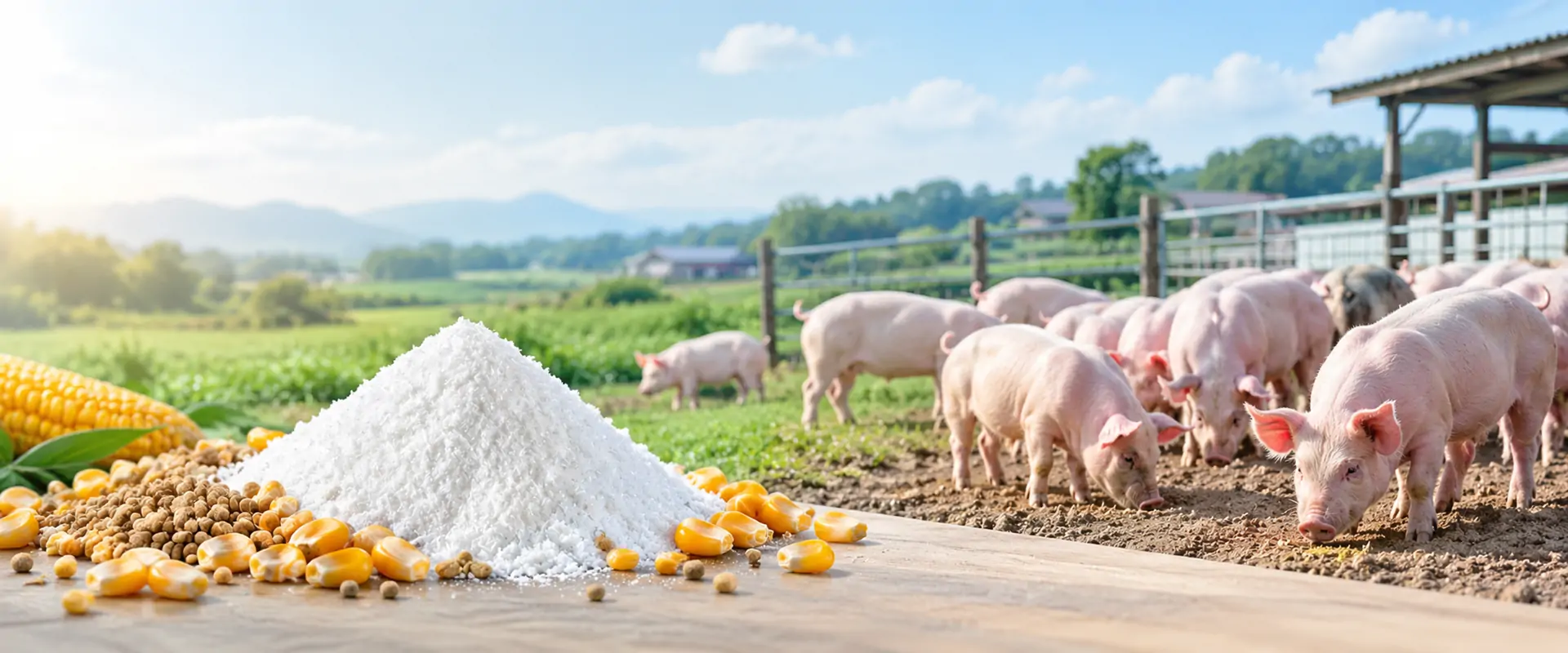
Product specifications are essential when purchasing L-threonine for commercial feed production. Feed-grade L-threonine is commonly available with a declared purity of at least 98.5% on a dry-matter basis. It is generally supplied as a crystalline powder or granulated material, with its exact appearance depending on the manufacturer and production process. These characteristics help buyers assess whether a product meets their technical and handling requirements.
Before placing an order, review the technical data sheet and request a batch-specific certificate of analysis (COA). The COA should report actual test results alongside the manufacturer’s acceptance limits. Typical feed-grade specifications include the following:
| Parameter | Common specification |
| L-threonine assay | Minimum 98.5% on a dry-matter basis |
| Appearance | White to yellowish-white crystalline powder or granules |
| Loss on drying | Often no more than 1.0% |
| Residue on ignition | Often no more than 0.5% |
| Specific rotation | Commonly −26° to −29° |
| Heavy metals and arsenic | Must meet applicable product and regulatory limits |
These values are representative commercial specifications, not universal requirements. Buyers should confirm the limits and testing methods stated in the actual product documentation.
Quality checks should also cover packaging integrity, batch identification, manufacturing date, shelf life, and recommended storage conditions. L-threonine should generally be kept in a cool, dry environment in tightly sealed packaging to limit moisture exposure and caking.
When you Buy L-Threonine for Livestock and Poultry Feed, verify that the product is explicitly intended for animal nutrition and meets the regulations applicable in your destination market. If your shipment requires Customs Clearance, confirm documentation and labeling requirements before dispatch to help prevent avoidable delays.
How to Choose the Right L-Threonine Supplement for Poultry and Livestock
The right L-threonine product should match the animal’s nutritional requirements, feed formulation, and manufacturing process. There is no single inclusion level or product specification that works equally well for broilers, layers, pigs, and other livestock. Poultry requirements change with age, strain, production stage, feed intake, and body weight. For example, Ross broiler specifications show different digestible threonine targets across starter, grower, and finisher diets.
Before you Buy L-Threonine for Livestock and Poultry Feed, compare the following points:
- Purity and assay: Confirm the declared L-threonine concentration and review the batch-specific COA.
- Digestibility and formulation basis: Formulate according to the amino acid system used by your nutritionist, such as standardized ileal digestible values where applicable.
- Physical form: Powder and granular products may differ in dust generation, handling, and mixing performance.
- Animal and production stage: Requirements for broilers, layers, piglets, and growing pigs are not interchangeable.
- Supplier consistency: Check whether the supplier can maintain the same specifications across repeated shipments.
The best purchase is therefore not necessarily the product with the highest assay or lowest quoted price. It is the one that provides consistent quality and fits the formulation accurately. For commercial operations, requesting technical specifications, COA, batch information, packaging details, and storage recommendations before ordering can prevent costly formulation and handling problems.
L-Threonine Price per Ton: Key Factors That Affect Feed-Grade Costs
L-threonine pricing can change significantly between suppliers, regions, and purchasing periods. A single global price per ton is therefore misleading. Current market reporting shows that prices in 2026 have been influenced by feed demand, available supply, fermentation costs, and regional market conditions. For example, China experienced weaker threonine prices during parts of Q2 2026 as domestic feed demand softened and product availability remained ample.
Several factors should be considered when comparing quotations:
| Cost factor | How it can affect the final price |
| Raw materials | Glucose, corn-derived substrates, and other fermentation inputs affect production costs |
| Production capacity | Greater supply availability can put downward pressure on prices |
| Feed industry demand | Strong poultry and livestock demand can increase purchasing pressure |
| Order volume | Bulk contracts may receive different commercial terms from smaller orders |
| Freight and insurance | International transportation can significantly change landed cost |
| Destination and logistics | Port, customs, storage, and inland delivery costs vary by market |
| Payment terms | Credit period and payment method may influence supplier quotations |
Market data also show that L-threonine is produced through microbial fermentation, making feedstock and energy costs important components of its production economics.
For this reason, buyers should compare the landed cost per ton, not just the supplier’s quoted product price. When you Buy L-Threonine for Livestock and Poultry Feed, ask whether the quotation includes freight, insurance, packaging, and other import-related charges. This provides a much more realistic basis for comparing suppliers and planning procurement budgets.
How to Calculate L-Threonine Inclusion Rates in Animal Feed Formulations
L-threonine should be added according to the nutritional gap in the complete diet, not according to a universal dosage. The first step is to determine the target digestible or standardized ileal digestible threonine concentration for the specific animal and production stage. Modern feed formulation focuses on achieving an appropriate amino acid profile rather than simply maximizing crude protein.
A simple calculation can be expressed as:
L-Threonine to add = (Target threonine − Existing digestible threonine) × Feed quantity ÷ Product purity
For example, suppose a 1,000 kg broiler diet requires 0.88% digestible threonine, while the existing ingredients provide 0.70%. The nutritional gap is:
0.88% − 0.70% = 0.18%
That equals 1.8 kg of additional threonine per 1,000 kg of feed, assuming the commercial product is 100% L-threonine. If the product assay is 98.5%, the required quantity would be slightly higher.
The calculation should always consider the actual feed formulation. For example, Aviagen’s broiler specifications list digestible threonine targets of 0.88%, 0.79%, and 0.72% for starter, grower, and finisher diets in one broiler program, respectively.
Before you Buy L-Threonine for Livestock and Poultry Feed, obtain the formulation’s existing amino acid contribution from all major ingredients. Then calculate the shortfall and account for the commercial product’s assay. This prevents unnecessary supplementation and helps maintain the correct amino acid balance.
L-Threonine vs. Other Essential Amino Acids: What Feed Formulators Need to Know
L-threonine should not be evaluated in isolation. It is one of several essential amino acids that must be supplied in the right proportions to support efficient protein deposition and animal performance. Poultry cannot synthesize threonine in sufficient amounts and therefore require a dietary source, along with amino acids such as lysine, methionine, valine, isoleucine, leucine, tryptophan, and others.
The practical difference between these amino acids is their role in the formulation and the extent to which each one limits the diet. For example, lysine is closely associated with muscle protein deposition, while methionine is particularly important for methyl-group metabolism and sulfur amino acid supply. Threonine has an important role in protein synthesis and intestinal mucin production.
| Amino acid | Main formulation consideration |
| L-Threonine | Protein synthesis and intestinal mucin production |
| L-Lysine | Important for muscle protein deposition and growth |
| Methionine | Protein synthesis and sulfur amino acid supply |
| L-Valine | Branched-chain amino acid required for tissue growth |
| L-Tryptophan | Required for protein synthesis and several metabolic functions |
Modern feed formulation therefore focuses on amino acid balance rather than simply increasing crude protein. Merck Veterinary Manual notes that purified amino acids can be added to poultry diets to reduce total protein levels while meeting essential amino acid requirements.
When you Buy L-Threonine for Livestock and Poultry Feed, the product should be considered as part of the complete amino acid profile. Adding more threonine cannot compensate for a shortage of another limiting amino acid. A qualified nutritionist should evaluate the complete ration, ingredient digestibility, animal category, and production target before changing supplementation levels.
How to Verify L-Threonine Quality Through COA, Testing, and Supplier Documentation
A certificate of analysis is one of the most useful documents for checking the quality of a commercial L-threonine shipment. However, a COA should not be treated as a substitute for proper supplier qualification. Buyers should compare the certificate with the agreed product specification and confirm that the reported results relate to the actual batch being delivered.
For feed-grade L-threonine, important information can include the assay, moisture content, physical description, batch number, manufacturing date, and analytical method. Current EU authorisation documents specify analytical methods based on ion-exchange chromatography for determining L-threonine and identify a minimum purity of 98% or 98.5% for specific authorised products.
Before accepting a shipment, check:
- Product identity: Confirm L-threonine, CAS 72-19-5, and the relevant product description.
- Assay: Compare the measured concentration with the contractual specification.
- Moisture: Check the reported value because moisture affects the effective concentration of the product.
- Analytical method: Make sure the testing method is clearly identified.
- Batch information: The COA should correspond to the lot being shipped.
- Storage requirements: Review recommended temperature, humidity, and packaging conditions.
- Regulatory documentation: Confirm that the product is permitted for its intended feed application in the destination market.
Regulatory specifications can vary according to the manufacturing source and jurisdiction. For example, EU Regulation 2026/1017 specifies L-threonine at ≥98% on a dry-matter basis for the authorised product covered by that regulation and identifies EN ISO 17180-based analytical procedures.
If you plan to Buy L-Threonine for Livestock and Poultry Feed in commercial quantities, it is also sensible to request a technical data sheet and safety documentation before payment. For higher-value shipments, independent laboratory testing can provide an additional quality check when required by the buyer or contract.
Where to Buy L-Threonine for Livestock and Poultry Feed in Bulk
Bulk purchasing requires more than finding a supplier offering the lowest price per ton. Feed manufacturers need a source that can provide consistent specifications, reliable documentation, suitable packaging, and dependable delivery schedules. This becomes particularly important when L-threonine is used continuously in commercial feed production.
Start by defining your purchasing specification before requesting quotations. Include the required purity, physical form, packaging size, quantity, destination, documentation, and delivery terms. This allows suppliers to quote against the same requirements and makes price comparisons more meaningful.
A practical bulk-buying checklist includes:
- Confirm the required specification. Define assay, moisture limits, packaging, and any additional quality requirements.
- Request a current COA. Make sure the document corresponds to a recent production batch.
- Ask about minimum order quantity. Larger orders may have different commercial terms.
- Compare landed cost. Include freight, insurance, customs charges, handling, and inland transportation.
- Check production and delivery capacity. A competitive quotation is of limited value if the supplier cannot maintain regular supply.
- Review storage and shelf-life information. Make sure your warehouse can maintain the recommended conditions.
- Confirm destination-market requirements. Feed additive regulations and documentation requirements differ between countries.
L-threonine is recognised as a nutritional feed additive in the EU, and current authorisations cover products produced through microbial fermentation. Some authorised products are specified at a minimum of 98% or 98.5% L-threonine, depending on the particular authorisation.
For businesses looking to Buy L-Threonine for Livestock and Poultry Feed, the safest purchasing approach is to compare suppliers on both technical quality and total delivered cost. A reliable long-term supplier should be able to provide consistent batches and the documentation needed for quality control, import procedures, and feed manufacturing records.
Final Considerations Before Buying L-Threonine for Animal Feed
L-threonine is more than an additional ingredient in an animal feed formula. When used correctly, it helps nutritionists balance essential amino acids, support normal growth, and formulate diets that meet animals’ requirements more precisely. However, achieving these benefits depends on selecting a suitable feed-grade product and incorporating it at an appropriate level.
Before you buy L-Threonine for Livestock and Poultry Feed, evaluate the product’s declared purity, quality documentation, consistency, and compatibility with your feed manufacturing process. Request a current certificate of analysis and verify the specifications against your purchasing requirements. For bulk orders, also review packaging integrity, storage recommendations, delivery schedules, and the supplier’s ability to maintain consistent product quality across shipments.
Price is another important consideration, but the lowest price per kilogram does not necessarily represent the best value. Compare quotations using the same product specifications, order quantities, delivery terms, and quality requirements. This approach makes it easier to assess the actual cost of sourcing L-threonine for your operation.
Finally, base inclusion rates on the animals’ nutritional requirements, the digestible amino acid content of the complete diet, and reliable formulation guidance. Working with a qualified animal nutritionist can help prevent unnecessary supplementation and improve feed formulation decisions.
By combining sound nutritional planning with careful supplier evaluation, feed manufacturers can make more informed purchasing decisions and maintain reliable standards in livestock and poultry production.
FAQ
- What is L-threonine used for in animal feed?
L-threonine is an essential amino acid used to help meet animals’ dietary amino acid requirements. In poultry, it contributes to protein synthesis and is also important for intestinal mucin production.
- What purity should feed-grade L-threonine have?
The required specification depends on the product and applicable regulations. Current EU authorisations include products with minimum L-threonine contents of 98% and 98.5% on a dry-matter basis.
- Can L-threonine reduce the crude protein level of animal feed?
It can contribute to more precise low-protein diet formulation by supplying a limiting essential amino acid without relying entirely on intact protein ingredients. However, the complete amino acid balance must remain adequate.
- How can I check the quality of an L-threonine shipment?
Review the batch-specific COA, assay, moisture, analytical method, batch number, and product specifications. For important commercial shipments, additional independent laboratory testing can also be considered.
- Is L-threonine suitable for both poultry and livestock?
L-threonine is used in animal nutrition across multiple species. However, the appropriate formulation and regulatory conditions depend on the animal species, production stage, diet, and destination market. Current EU authorisations include L-threonine products for all animal species.
- What should I compare when buying L-threonine in bulk?
Compare purity, moisture, physical form, COA and technical documentation, packaging, minimum order quantity, delivery terms, freight, and the final landed cost rather than comparing the quoted price per ton alone.
- Can L-threonine be added without changing the rest of the feed formula?
It should not be added arbitrarily. Threonine supplementation needs to be evaluated against the existing amino acid profile and the nutritional requirements of the target animals. An imbalance among essential amino acids can limit the expected response.