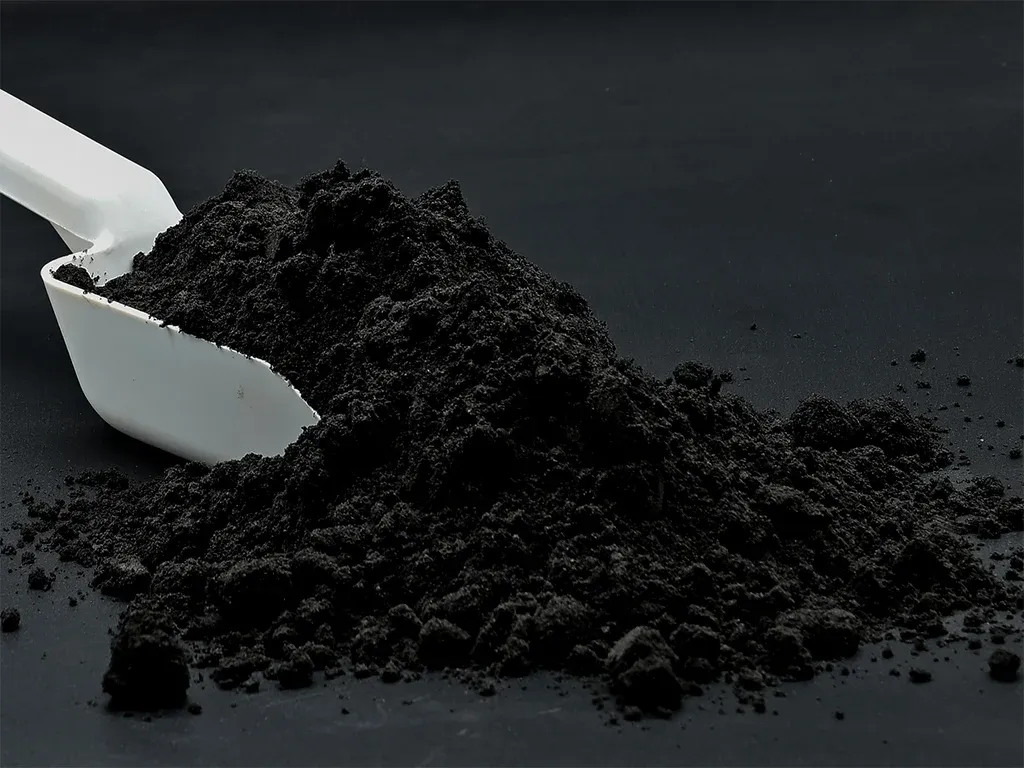
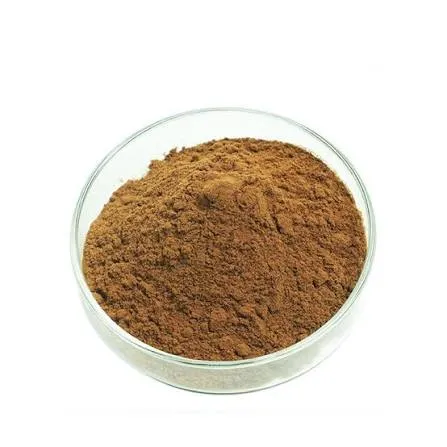
Better feed attraction can start with the right marine ingredient. Squid liver powder is used in aquaculture feeds because its marine-derived compounds can stimulate the chemosensory system of fish and shrimp, encouraging them to locate, approach, and consume feed. Its value is not simply a strong smell. Squid-based ingredients can provide free amino acids, small peptides, taurine, and other water-soluble compounds that contribute to feeding responses. Research on shrimp has shown that squid-derived ingredients can improve feed intake and attractability, while FAO reports identify squid liver powder as a functional ingredient used in commercial shrimp feeds.
For feed manufacturers, however, the important question is not whether squid liver powder is attractive, but why it works and how it should be used. Ingredient quality, inclusion level, processing, feed stability, and the target species can all affect its performance. In this article, we examine the scientific basis of squid liver powder as a natural feed attractant and explain the practical considerations that matter when formulating aquafeeds. Continue reading to understand how this ingredient can be used more effectively.
How Does Squid Liver Powder Attract Fish and Shrimp to Feed?
The main advantage of Squid Liver Powder as a Natural Feed Attractant is its ability to release marine-derived chemical cues that aquatic animals can detect through their chemosensory systems. Shrimp, in particular, rely heavily on chemical signals to locate and evaluate food. FAO notes that shrimp and many marine species use chemoreceptors around the mouth and on appendages to sense feed before ingestion.
Marine ingredients such as squid products are therefore widely used when improving feed attractiveness is a priority. Squid liver powder does not work simply because it has a strong odor. Its effectiveness is related to the compounds released from the ingredient when the pellet becomes wet. Water-soluble substances can diffuse from the feed and create a chemical signal that helps animals locate it.
For practical feed formulation, the following factors matter:
- Ingredient freshness and quality
- Concentration of soluble attractant compounds
- Pellet water stability
- Inclusion level
- Target species and life stage
A 2006 study with Litopenaeus vannamei specifically evaluated squid liver meal among commercial attractants and found measurable behavioral responses to the ingredient.
For suppliers and feed manufacturers such as pishva holding, maintaining consistent raw-material quality is therefore important. A high-quality squid liver product should be evaluated not only for its protein and lipid content but also for its functional value in the finished feed.
Which Compounds in Squid Liver Powder Trigger Feeding Behavior?
The feeding response is driven by a combination of soluble chemical compounds, rather than one single substance. This is an important point when evaluating squid liver powder for aquafeed production. Free amino acids, small peptides and other low-molecular-weight compounds can dissolve into the surrounding water and interact with the chemosensory system of fish and shrimp.
Research on squid-processing byproducts provides useful evidence for this mechanism. An ACS-published study found that enzymatic hydrolysis of squid byproducts increased total free amino acids approximately twofold and produced a hydrolysate with demonstrated feed attractability.
Among the compounds of interest are:
| Compound group | Potential role |
| Free amino acids | Chemical cues involved in feed detection and feeding stimulation |
| Small peptides | Can contribute to palatability and chemical signaling |
| Taurine | A naturally occurring marine compound associated with feeding responses |
| Nucleotides and related compounds | May contribute to the overall chemosensory profile |
| Soluble marine compounds | Help release feeding cues into the water |
However, it would be misleading to claim that every squid liver powder has exactly the same attractant profile. Processing conditions, raw-material composition and storage can substantially affect the concentration and availability of these compounds.
Studies comparing aquafeed ingredients have also linked higher levels of free amino acids, nucleotides, taurine and small peptides with differences in feeding effects.
This is why Squid liver powder should be assessed as a complete ingredient rather than judged solely by crude protein percentage.
The Role of Free Amino Acids and Peptides in Feed Attraction
Free amino acids and small peptides are among the most important chemical signals to consider when developing an attractive aquaculture feed. Unlike intact proteins, free amino acids are already in a form that can dissolve readily when feed contacts water. This makes them particularly relevant to the first stages of feed detection.
Shrimp are highly dependent on chemical cues. According to FAO guidance, feeding stimulants can improve the speed and acceptability of feeding, which can also reduce the time feed remains exposed to water and consequently limit nutrient losses.
Squid-derived ingredients can provide several classes of these compounds naturally. Importantly, their effect is not necessarily additive in a simple way. Animals respond to a mixture of chemical signals, and the balance between compounds can influence the overall feeding response.
A useful formulation approach is to consider:
- Free amino acid concentration
- Small-peptide content
- Protein solubility
- Water stability of the finished pellet
- Target species
- Overall diet composition
Research on squid byproduct hydrolysate found that hydrolysis increased free amino acids and generated a product with feed attractability, supporting the importance of soluble nitrogenous compounds in squid-derived ingredients.
Therefore, Squid Liver Powder as a Natural Feed Attractant should not be evaluated only according to its crude protein value. Its functional composition and behavior after immersion in water are equally relevant when the objective is to stimulate feed intake.
Why Is Squid Liver Powder Particularly Effective in Shrimp Feed?
Shrimp are a particularly interesting target for natural attractants because they depend strongly on chemosensory information when locating and evaluating food. They can detect chemical cues in the surrounding water and use receptors associated with their appendages and mouthparts during feeding. FAO identifies squid meal and other marine ingredients as natural sources with attractant properties for shrimp and marine fish.
Squid liver powder is also attractive from a formulation perspective because it can provide more than feeding cues. FAO reports that Squid liver powder has been routinely used in commercial shrimp feeds and describes typical historical inclusion levels of approximately 2–5%, while noting its nutritional contribution from marine protein and essential lipids.
However, more is not necessarily better. A controlled study involving L. vannamei compared squid liver meal with several commercial attractants at different inclusion levels. The results showed that responses varied between ingredients and concentrations; some alternatives produced stronger preference responses than squid liver meal under the conditions tested.
For practical shrimp-feed development, squid liver powder should therefore be considered alongside:
- Feed intake and feeding speed
- Pellet stability in water
- Ingredient quality and consistency
- Total diet composition
- Cost per unit of functional effect
The strongest formulation is not necessarily the one containing the highest amount of attractant. It is the one that provides a reliable feeding response while maintaining nutritional balance, physical stability and economic efficiency.
How Much Squid Liver Powder Should Be Included in Aquafeeds?
There is no single inclusion rate that works for every aquafeed. The appropriate level depends on the target species, feed formulation, ingredient quality, and whether squid liver powder is being used mainly as a nutritional ingredient or as an attractant. FAO data report typical inclusion levels of 2–5% squid liver powder in shrimp feeds, while broader ingredient tables give a range of 1–10% for crustacean diets. These figures are useful reference points, not universal formulation rules.
For a new formulation, it is more sensible to begin with a controlled trial rather than immediately using a high inclusion rate. Compare several levels while keeping the rest of the diet unchanged.
A practical trial could examine:
- 1% inclusion
- 2% inclusion
- 3–5% inclusion
Then measure feed intake, feeding speed, pellet stability, growth and feed conversion.
The concept behind Squid Liver Powder as a Natural Feed Attractant is to improve the feeding response without unnecessarily increasing formulation costs. FAO also emphasizes that aquafeed formulations should be evaluated according to nutrient composition, digestibility, physical characteristics and cost rather than copied directly from another formulation.
How to Use Squid Liver Powder Without Compromising Feed Quality
Using squid liver powder effectively requires more than selecting an inclusion percentage. The ingredient must fit the nutritional and physical characteristics of the complete feed. Squid-derived materials can contribute marine protein and lipids in addition to their potential attractant properties, so increasing the inclusion level also changes the overall nutrient profile of the diet.
One important consideration is feed-water stability. If soluble attractant compounds are released too rapidly, valuable nutrients may leach from the pellet before the shrimp or fish consume it. FAO specifically notes that improving feed attractiveness can shorten the time feed remains in water and help reduce nutrient leaching.
Before commercial production, check:
| Quality factor | What to evaluate |
| Moisture | Excess moisture can reduce storage stability |
| Lipid quality | Check for oxidation and rancidity |
| Protein | Confirm consistency between batches |
| Particle size | Ensure uniform mixing and pellet production |
| Water stability | Prevent excessive nutrient loss |
| Microbiological quality | Verify product safety |
| Storage | Protect the powder from heat, moisture and oxygen |
The goal is to make Squid Liver Powder as a Natural Feed Attractant part of a stable, nutritionally balanced feed rather than treating it as an isolated additive.
Squid Liver Powder vs. Synthetic Feed Attractants: Which Is More Effective?
The answer depends on the formulation and the species. Squid liver powder has an important advantage: it is a complex natural ingredient, so it can supply several compounds simultaneously rather than relying on a single purified attractant molecule.
FAO distinguishes between natural ingredients with feeding-stimulant properties and purified or synthetic compounds responsible for those properties. Squid meal is specifically listed among natural attractant sources for shrimp and marine fish.
However, natural does not automatically mean more effective. Research comparing presumed feeding stimulants in Penaeus monodon found that shrimp showed stronger preference for some crustacean and krill meals than for squid meal. In a subsequent growth experiment, differences in feed consumption were not statistically significant among the tested feeds.
| Natural squid-derived ingredient | Synthetic/purified attractant |
| Contains multiple marine compounds | Can target specific compounds |
| May contribute protein and lipids | Usually contributes little nutritional value |
| Composition can vary between batches | Often offers greater compositional consistency |
| Fits naturally into marine-based formulations | Can be used at very low inclusion levels |
| May support both nutrition and palatability | Primarily designed for functional effects |
For this reason, Squid Liver Powder as a Natural Feed Attractant should be compared with synthetic products through controlled feeding trials rather than assumptions about which category is inherently superior.
Conclusion: How to Use Squid Liver Powder Effectively as a Feed Attractant
A good attractant should do more than make feed smell appealing—it should help trigger a measurable feeding response. Squid liver powder can serve this purpose because squid-derived ingredients contain compounds associated with chemosensory stimulation, including free amino acids and small peptides. Studies with shrimp have demonstrated that squid-based ingredients can increase feed intake and improve feed attractability, although the response depends on the ingredient, inclusion level, diet composition, and animal species.
The practical value of Squid Liver Powder as a Natural Feed Attractant therefore comes from using it as part of a properly balanced formulation rather than treating it as a universal solution. FAO data indicate that squid liver powder has traditionally been incorporated into shrimp feeds at approximately 2–5%, but these figures should not be interpreted as a fixed recommendation for every feed or farming system.
Ingredient quality is equally important. Processing and storage can influence the nutritional and functional characteristics of squid-derived materials. Safety should also be considered because squid viscera products may contain contaminants such as cadmium, depending on their source.
Ultimately, the best approach is to test the ingredient within the complete feed, monitor feed intake and stability, and adjust the inclusion level according to the target species and production conditions.
FAQ
- Is squid liver powder a natural feed attractant?
Yes. Squid-derived ingredients are recognized in aquaculture literature as natural sources with feeding-attractant properties, particularly for shrimp and marine fish.
- What is a typical inclusion level of squid liver powder in shrimp feed?
FAO reports typical commercial inclusion levels of approximately 2–5% for squid liver powder in shrimp feeds. Actual formulation should be determined according to the complete diet and target species.
- Can too much squid liver powder reduce feed quality?
Potentially. Increasing an ingredient changes the diet’s nutrient balance, cost and physical properties. High inclusion should therefore be evaluated through formulation and feeding trials rather than assumed to improve attractability indefinitely.
- Does squid liver powder work better than synthetic attractants?
Not necessarily. Effectiveness varies with species, ingredient composition and inclusion level. Comparative research has shown that other natural attractants can outperform squid-derived ingredients under some experimental conditions.
- What makes squid liver powder attractive to shrimp?
Its marine-derived soluble compounds are important. Free amino acids, peptides and other water-soluble substances can contribute to the chemical cues that shrimp detect during feeding. FAO describes the chemosensory importance of feeding stimulants in shrimp and marine fish.
- Should squid liver powder be tested before commercial use?
Yes. Testing different inclusion levels while monitoring feed intake, water stability, growth and feed conversion provides a much stronger basis for formulation decisions than relying on a fixed percentage.